


Salmon is the all-encompassing name for several varieties of fish that are freshwater fish, saltwater fish, or fish that spend part of their lives in one habitat and part of their lives in the other. Salmon is one of the most-desired restaurant fish, and they are most commonly found in the tributaries of the North Atlantic and Pacific Oceans, but have also been introduced into other areas, such as the Great Lakes in North America. Salmon is one of the more difficult fish to catch, but there are some things you can try to improve your odds of hooking one of these tasty fish.
The Proper Environment
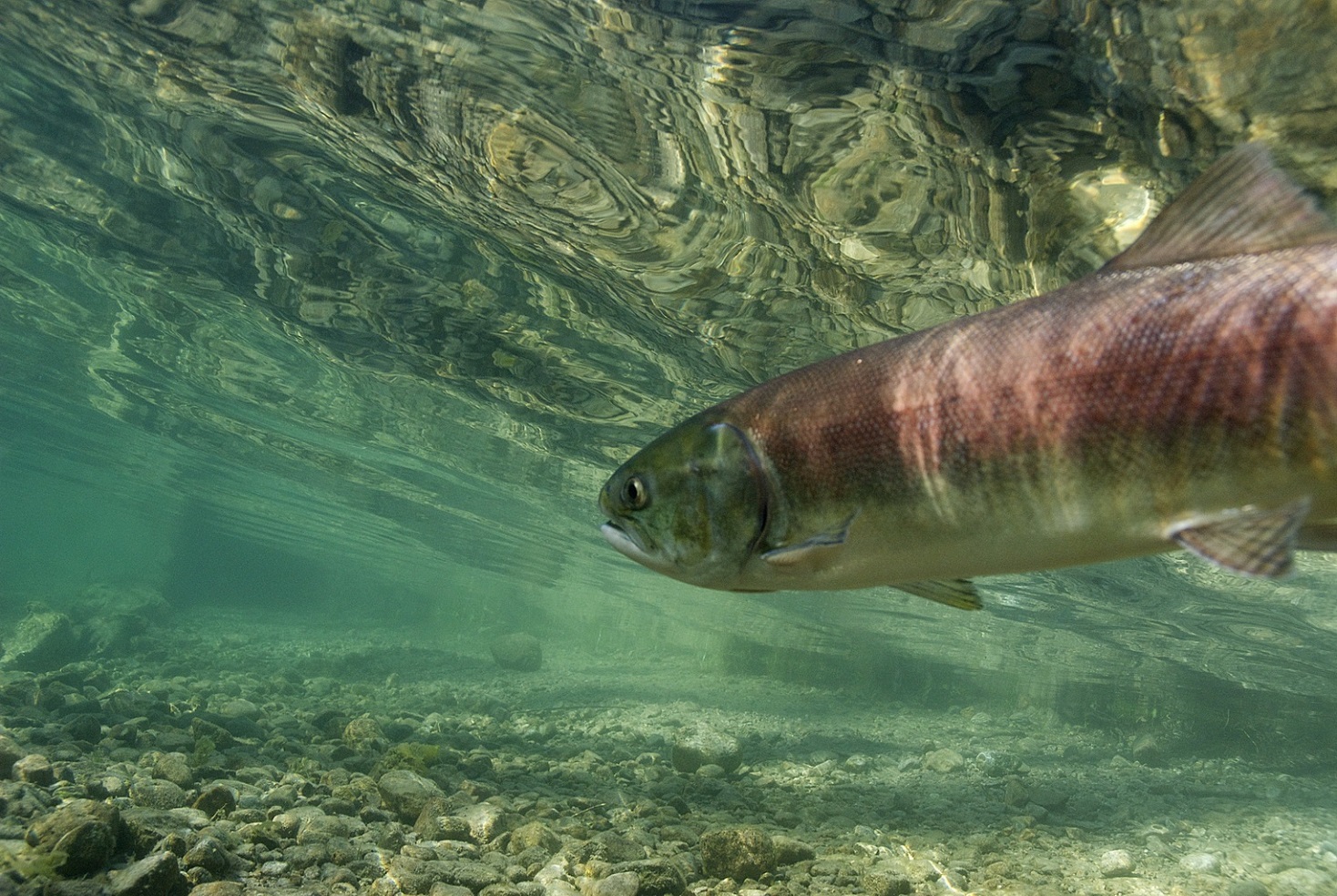 Salmon prefer very specific conditions. They like the water temperature to be around 55 degrees, and they are typically found somewhere between the water surface and 125 feet deep. Really, for your best bet of catching salmon, you should consult a map. Look for salmon runs (migration up a river in order to spawn), locations of hatcheries, dams, and possible spawning locations to figure out the best places to start fishing for salmon.
The best type of weather for salmon fishing is cloudy, and not too hot, not too cold. Expect the most bites at dawn or at dusk, not during the middle of the day.
Lures and Bait
Salmon are notoriously fickle when it comes to bait and lures. What they like for one bite, they might ignore for another. For this reason, it’s important to have a variety of lures. Spinner lures and colorful lures usually have the best results if you’re not using live bait. The recommendation is to use light-colored lures on brighter days, and to use darker-colored lures on overcast, cloudy days.
If you would prefer to use live bait, the one type that salmon consistently go after is live bait roe. Whether you prefer live bait or lures, it’s recommended to use a red fishing line to blend better into the water, and to sharpen the hooks. Salmon have thick jaws, and a dull hook won’t easily catch.
A Variety of Fishing Techniques
 You needn’t feel locked into one style of fishing in order to catch salmon. Drift fishing, plunking, float fishing, and trolling are all good ways to try to hook salmon. Drift fishing means you cast your line upstream, let the line drift back toward you, reel the line in, and start all over again. This is somewhat similar to fly fishing, and it can be used either from the shore or from an anchored boat. Plunking means that you cast the line and leave it until something bites. Float fishing is a different variation of plunking, where the bobber stays on the surface, but the rest of the line sinks. You have to keep watch on the bobber to know if a fish is biting.
Trolling is probably the most common technique of fishing for salmon, and is best done from a slow-moving boat. For any of these methods, it’s suggested to use a medium-weight rod, with about a 30-pound test line, since some salmon can be quite large.
When fishing for salmon in open water, remember to fish with the tide, not against it. Salmon tend to prefer choppy water over still water, so you might want to place your lure in the wake of your boat. If you’re trolling, try to stick with the choppy water on top, rather than the still, deeper waters. Also, watch for birds on the water to find live bait fish areas. Salmon will likely be somewhere in the area.
Invest in a Fishfinder
A fishfinder can be very useful when fishing for salmon. A fishfinder won’t actually find the salmon for you, but it can be used to find schools of live bait fish, such as smelt, which are a favorite food of salmon. When you find those schools of smelt, salmon are likely nearby in the water. More expensive fishfinder models can also tell you the water temperature, which allows you to search for the preferred 55-degree water that salmon favor.
Fishing for salmon is definitely not the easiest activity in the world, and it’s probably not for a novice fisherman. But with practice and these tips, any fisherman can improve the chances of catching one of the more delicious fish out there.